
Why Choose the Golf Club for Your Business?

A golf club can be more than a place to play. For a business, it can provide a distinctive setting for client meetings, team events, and relationship-building. The appeal is tangible: a quiet course, a reserved dining room, and time to talk beyond the office. Still, the setting alone does not guarantee business results.

The National Golf Foundation reported that 26.6 million Americans played on-course golf in 2023, evidence of the sport’s broad reach in the United States. This figure describes participation, not business-event demand, so it should not be treated as proof that every club is a profitable venue. Arnold Palmer captured golf’s distinctive challenge: “Golf is deceptively simple and endlessly complicated; it satisfies the soul and frustrates the intellect.” That mix of enjoyment and focus helps explain why the game can create memorable shared experiences.

Choosing the golf club for your business requires practical judgment. Consider location, event capacity, service quality, accessibility, and the needs of guests who may not play. Ask about food options, meeting facilities, weather plans, and transparent pricing. A polished clubhouse matters. So does a welcoming atmosphere for beginners. The fit may not be right for every company; that deserves honest reflection. With clear goals and careful planning, a golf club can support meaningful connections while offering a fresh alternative to a conventional meeting space.
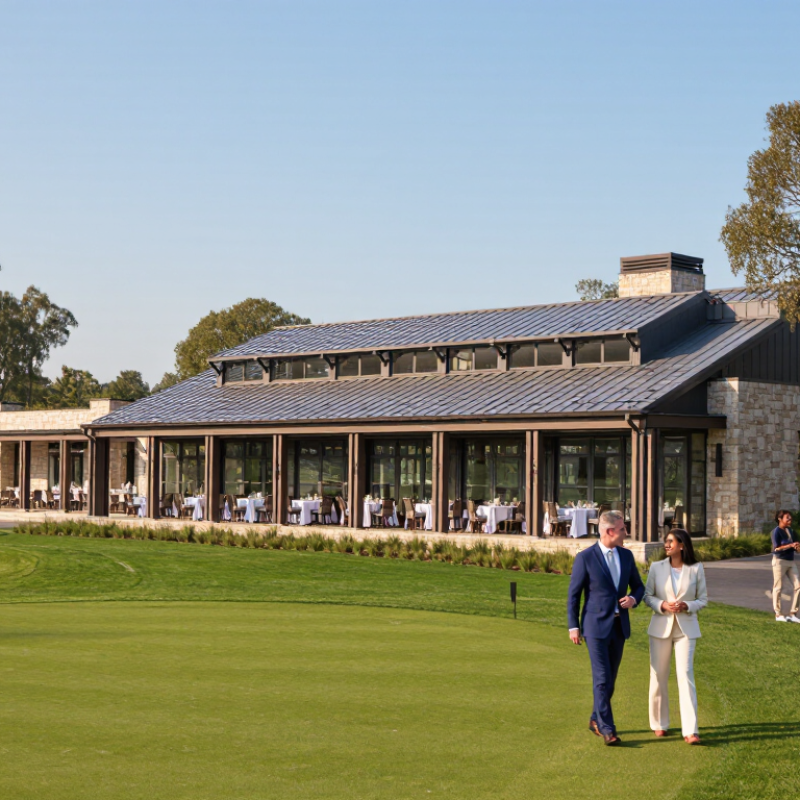
Why Choose the Golf Club for Your Business?

Golf Club Business Models: Membership, Public Play, Hospitality, and Events

A golf club can earn revenue through several business models, but each serves a different customer. Memberships provide recurring income and help managers plan staffing and course maintenance. Members may value familiar tee times, a well-kept practice area, and a clubhouse where staff remember their preferences. Predictable revenue helps. Still, a club that relies too heavily on members may struggle to attract new visitors or younger players.

Public play opens the course to daily bookings and casual golfers. Operators can adjust tee-time prices by season and demand, while protecting enough space for members. Clear booking rules matter. A late frost, slow groups, or a busy weekend can disrupt the schedule, so realistic capacity planning is essential. Public play can fill quieter hours, though frequent discounts may weaken the perceived value of a round.

Hospitality and events extend income beyond the fairways. A club might host a small business dinner, a family celebration, or a tournament followed by a meal in the clubhouse. Reliable catering, accessible event spaces, and clear package pricing help guests understand what they are buying. The details are tangible: dry towels after rain, hot coffee before an early tee time, and staff who know the event schedule. These services require training and coordination, and they do not always produce strong margins. I would review labor, food waste, and guest feedback each month; even a polished plan can miss what customers actually want.


Market Demand: 26.6 Million U.S. On-Course Golfers in 2023 (NGF)

Why Choose the Golf Club for Your Business?

The National Golf Foundation reported 26.6 million on-course golfers in the United States in 2023. That figure points to a substantial audience, but it does not guarantee demand for every golf-related business. Local participation, customer habits, and nearby course access matter. A club can serve players who need lessons, equipment guidance, practice space, or a comfortable place to meet. Picture a weekday afternoon: golfers arrive with muddy shoes, ask about a spare glove, and linger over a quick meal. Those ordinary needs can reveal practical opportunities.

Tips: Study the local market before investing. Talk with course operators and golfers, and observe busy and quiet hours. Track which services people request, not just what they say they might buy. Small details count. A crowded practice area may suggest demand for coaching, while empty tables may signal that food service needs a different approach.

Build around reliable service and realistic costs. Golfers may return for helpful staff, clean facilities, and scheduling that respects their time. Still, participation numbers are broad, not a promise of revenue. I might be tempted to treat the national figure as a green light, but that would be too simple. Test one service, gather feedback, and adjust before expanding. A modest start may feel slow, yet it can show whether the idea fits the community.

Why Choose the Golf Club for Your Business?

Market demand: 26.6 million people played golf on a course in the United States in 2023.

This large participant base highlights the reach of the golf market.

Economic Impact: Golf Contributed $102 Billion to the U.S. Economy in 2022 (NGF)

A golf club can offer businesses more than a quiet place to meet. The National Golf Foundation’s 2022 economic-impact analysis estimated that golf generated $102 billion in U.S. economic activity. Its estimate includes spending at facilities and activity across related sectors, such as tourism, equipment, and golf-course development. That scale matters. It shows how a local club can connect hospitality staff, grounds crews, event suppliers, and visiting players within a wider economy.

$102 billion

in U.S. economic activity

26.6 million

people who played on a golf course in 2023

The audience is substantial, too. The NGF’s 2024 Golf Participation Report counted 26.6 million people who played on a golf course in 2023. For a business, that can mean client meetings over lunch, a small tournament with local suppliers, or conversations beside the practice green. These are real settings for building relationships, not automatic sales channels. A crowded tee sheet does not prove that a club will deliver business leads. Ask about event costs, accessibility, and the mix of members and guests. The economic figures describe golf’s national reach; each club still needs to show how its facilities serve your specific goals.

Customer Reach: 45 Million Americans Played On- or Off-Course Golf in 2023 (NGF)

A golf club can give a business access to a broad, active customer community. In 2023, 45 million Americans played on- or off-course golf, according to the National Golf Foundation (NGF). That figure matters beyond the fairway. It signals a large audience with different ages, incomes, schedules, and interests. A club setting also creates natural moments for conversation. Members may meet near the practice range, dining area, or tournament check-in desk. These encounters feel less forced than a cold sales call.

For a business, the value depends on how carefully it participates. A useful workshop, small hospitality event, or practical demonstration can earn attention. Staff should understand the audience before promoting anything. A family-focused club event needs a different tone from an executive networking morning. Clear consent matters when collecting contact details. Accurate claims matter even more. Trust can disappear after one exaggerated promise.

The 45 million figure is powerful, but it is not a guaranteed customer count. Not every golfer will need the same service. Some may prefer casual play, while others visit only for occasional events. Practical experience suggests that thoughtful follow-up often performs better than repeated promotion. Results can still be uneven. Weather, location, pricing, and club culture all influence participation. Businesses should track attendance, qualified conversations, and returning visitors, then adjust their approach with humility.

Business Fit: Assessing Capital Needs, Seasonality, and Revenue Diversification

Why Choose the Golf Club for Your Business?

Business Fit: Assessing Capital Needs, Seasonality, and Revenue Diversification

A golf club demands serious upfront capital. Land, irrigation, maintenance equipment, facilities, and staffing can consume millions before opening day. The National Golf Foundation reported that 45 million Americans played golf on a course in 2023. That figure suggests strong demand, but it does not guarantee local profitability. A feasibility study should test membership pricing, visitor volume, construction costs, and debt service. The model must survive a weak opening year.

Weather creates another pressure point. A northern club may earn most playing revenue between April and October. A coastal or indoor facility may spread demand more evenly. Local rainfall, frost dates, and daylight hours deserve analysis. National averages can mislead. I once treated annual visitor demand as stable, and the assumption looked comfortable until winter staffing costs appeared.

Revenue diversification can reduce that exposure. Consider coaching, tournaments, dining, private events, retail, practice areas, and corporate memberships. The Club Management Association of America’s industry reporting consistently separates membership, food and beverage, golf operations, and events as distinct financial areas. Each needs its own margin review. The R&A’s Golf Around the World 2023 report recorded 66.6 million golfers worldwide, indicating a broad participation base. Still, participation is not cash flow. A club with crowded weekends may remain underused on Tuesdays. Test weekday offers, monitor cancellation patterns, and reserve capital for irrigation failures. The numbers will be imperfect. Your assumptions should be visible.

Why Choose the Golf Club for Your Business? — Business Fit: Assessing Capital Needs, Seasonality, and Revenue Diversification

A practical screening framework for evaluating a golf-club business. Figures are broad planning estimates in U.S. dollars, not guarantees; actual requirements depend on land, location, course condition, labor costs, and local demand.

Business Dimension Planning Range or Pattern What It Means for an Investor Due-Diligence Check
Land requirement Many 18-hole courses occupy roughly 120–180 acres; terrain, routing, water features, and support facilities can change this substantially. A large site creates meaningful land, maintenance, and environmental obligations, but may also support practice, dining, events, or lodging. Confirm usable acreage, property rights, zoning, water access, drainage, and any conservation or environmental restrictions.
Initial capital needs Developing an 18-hole course can require several million to tens of millions of dollars, excluding land in many project estimates. Buying an existing facility varies widely with condition and included assets. Course construction or major renovation is capital-intensive; acquisition price alone may understate the cash needed after closing. Request independent course-condition assessments, a capital-improvement plan, equipment inventory, and a post-acquisition cash forecast.
Ongoing maintenance Recurring costs commonly include grounds labor, irrigation, turf inputs, fuel, equipment repairs, and utilities; expenses persist even when play is slow. Maintenance is a substantial fixed operating commitment and can be affected by weather, wage rates, water prices, and course standards. Review several years of maintenance spending, staffing schedules, irrigation efficiency, equipment age, and deferred work.
Seasonality of play In temperate climates, rounds and outdoor revenue can concentrate in the warmer months. In a cold-weather market, winter play may be limited or unavailable. Revenue may fluctuate while debt service, insurance, property costs, and core upkeep continue year-round. Analyze monthly rounds and revenue over at least three years; compare weather, closures, tee-time availability, and local tourism patterns.
Weather and water exposure Drought, heat, heavy rain, frost, and storms can affect course conditions, playable days, irrigation demand, and maintenance costs. Climate risk can influence both annual earnings and the amount of reserve capital required. Assess water rights and rates, drought restrictions, drainage, flood exposure, insurance terms, and drought-tolerant turf options.
Core golf revenue Typical sources include green fees, memberships, cart rentals, practice facilities, and merchandise. The mix depends on whether the operation is public, private, or semi-private. Dependence on rounds or membership dues makes performance sensitive to local participation, pricing, competition, and course quality. Separate revenue by source and customer type; review rounds, membership retention, discounting, and realized revenue per round.
Revenue diversification Potential additions include food and beverage, events, instruction, leagues, tournaments, club fitting, and, where suitable, lodging or recreation. Additional activities can broaden demand, but each requires staff, operating capability, investment, and local customer fit. Check each activity’s sales, direct costs, labor needs, capacity, seasonality, and contribution to operating cash flow.
Food, beverage, and events Dining and event revenue can serve golfers and non-golfers; weddings, meetings, and banquets may have different booking cycles from tee times. These activities can use clubhouse space beyond golf hours, but they are not automatically profitable and may require kitchen or facility upgrades. Review event bookings, cancellation terms, food costs, staffing, kitchen condition, local event competition, and space utilization.
Membership model Memberships can provide recurring dues, while public-play models rely more heavily on daily bookings and variable demand. Recurring dues may improve revenue visibility, but benefits, member access, retention, and capacity limits affect their value. Examine membership categories, renewal and resignation trends, initiation-fee treatment, waitlists, and tee-time access policies.
Staffing and service delivery Operations may require grounds crews, golf operations, clubhouse staff, food-service workers, and seasonal or event labor. Labor availability and scheduling can affect service quality, operating costs, and the ability to capture peak-season demand. Review payroll by department, vacancies, overtime, contractor use, training, and applicable employment requirements.
Best-fit business profile Most suitable for an operator with patient capital, strong local-market knowledge, hands-on management, and a realistic plan for seasonal cash flow. A golf club may be a poor fit for investors seeking low upfront costs, quick payback, or minimal operational involvement. Stress-test the business under lower rounds, higher maintenance costs, delayed renovations, and a shorter-than-expected playing season.

Note: Land and development figures are broad order-of-magnitude planning context, not a valuation or budget. Obtain local engineering, agronomy, legal, tax, and market advice before making an investment decision.