
A golf champion may look effortless at impact, but that clean strike often begins with equipment built around a specific swing. Custom golf clubs can adjust shaft flex, club length, lie angle, grip size, and head design. These details matter when a player needs a predictable ball flight under pressure. A club that feels stable in the hands can help a golfer repeat a familiar motion. It cannot create skill by itself.
Club designer Tom Wishon has long argued that golf clubs should be fitted to the golfer, rather than forcing the golfer to adapt to unsuitable equipment. That principle helps explain why elite players test clubs carefully. A fitter may watch ball speed and launch angle on a monitor, then compare those numbers with real shots on grass. A few degrees of lie angle can change where the ball starts. A shaft that feels too soft may produce a different flight or timing. Small differences, visible in data and felt in the hands.
Still, custom does not mean automatically better. A poorly measured fitting can lead to the wrong setup, and frequent changes may unsettle a player’s routine. Even a golf champion needs time to test new clubs in varied conditions. The useful question is not whether custom equipment looks professional. It is whether each adjustment supports consistent contact, comfort, and confidence. That is where fitting earns its place—and where expectations need a little honesty.
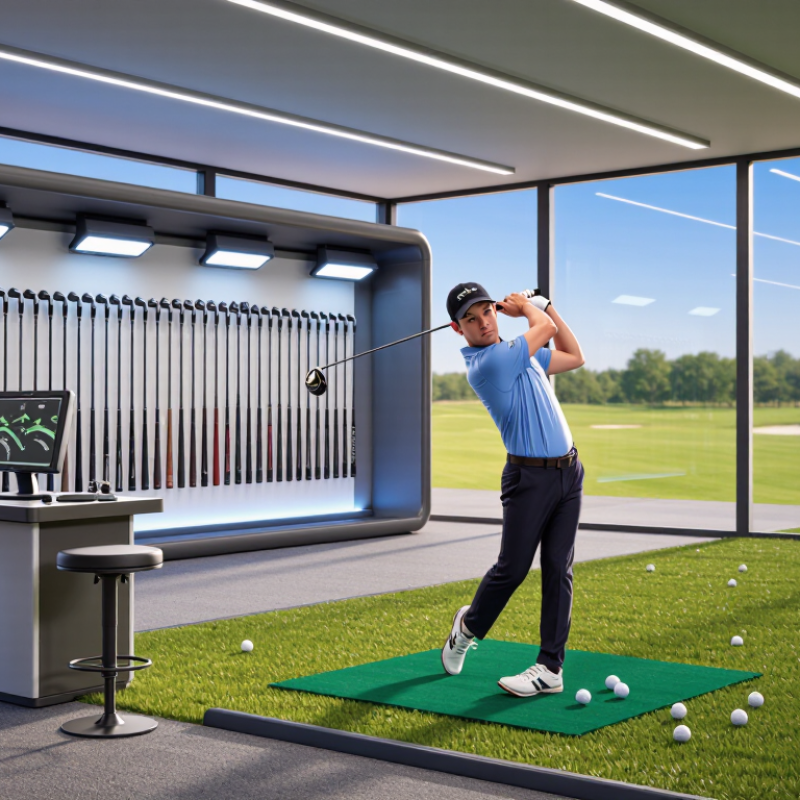
Custom golf clubs are clubs built or adjusted around a player’s measurements, swing, and typical ball flight. A fitting may change shaft length, weight, or flex; lie angle; loft; grip size; and clubhead setup. Standard clubs are produced in set specifications, so their stock shaft and dimensions may not suit every golfer. Custom does not always mean every part is newly made. Sometimes, a measured adjustment to a standard club is enough.
The USGA and R&A’s Equipment Rules set a 460 cc maximum driver-head volume, with a 10 cc tolerance. That ceiling illustrates an important difference: customization works within equipment limits, refining how a club fits the player rather than allowing unlimited performance changes. During a fitting, a professional can compare launch-monitor readings with real strikes and ball flight. A few extra yards are not guaranteed. That matters. A single session can also mislead if the golfer is tired or changes their swing under observation. Record the shaft, length, and lie angle tested, then check whether the chosen setup still feels consistent on the course. A club can look perfect on paper and still feel slightly wrong in the hands.
| Fitting Dimension | Standard Clubs | Custom-Fitted Clubs | Why It Matters to a Champion |
|---|---|---|---|
| Club length | Supplied in predetermined stock lengths for each club type. | Length can be adjusted to the player’s posture, arm reach, and setup. | A suitable length can support a repeatable setup and centered contact. |
| Lie angle | Uses the manufacturer’s standard lie-angle specification. | Can be selected or adjusted to suit how the sole meets the ground at impact, where the club design permits. | A better-matched lie angle may help reduce unintended direction bias from the club’s orientation at impact. |
| Shaft characteristics | Typically offered with a limited selection of shaft flexes, weights, and profiles. | Shaft weight, flex, length, and bend profile can be selected based on swing data and player preference. | The shaft influences feel, timing, launch, and dispersion; a fitting helps identify a suitable combination. |
| Grip size and feel | Usually supplied with a standard grip size and a limited range of choices. | Grip size, texture, and build-up can be chosen to suit hand size and comfort. | Consistent grip feel can support a comfortable, repeatable hold throughout a round. |
| Loft and club gapping | Uses standard loft specifications and common set configurations. | Lofts and set composition can be reviewed against actual carry distances; adjustments depend on the club’s design. | Clear distance gaps between clubs can make club selection more predictable. |
| Head design and settings | A standard head model and its default settings are supplied. | Head shape, forgiveness, and available adjustable settings can be matched to shot pattern and preferences. | The player can prioritize preferred launch, trajectory, and workability rather than relying on a one-size-fits-most setup. |
| How the clubs are selected | Chosen primarily from standard specifications and general player categories. | Selected through a fitting that may include measurements, ball-flight observation, and comparison of club options. | Champions can use measured feedback to fine-tune equipment for their swing and playing conditions. |
Note: Standard specifications and adjustment options vary by club type and design. Custom fitting can improve the match between a golfer and their equipment, but results depend on the individual swing and are not guaranteed.

Champions choose custom golf clubs because equipment must respond to their actual swing, not an average player’s profile. Club fitting connects swing speed, attack angle, tempo, and strike location with suitable club specifications. A qualified fitter may adjust shaft weight, flex, length, loft, lie angle, and grip size. Small changes can influence launch height, spin, direction, and comfort.
During a fitting, the golfer usually hits several shots while a launch monitor records measurable results. I have seen players gain better contact simply by changing the club’s lie angle by a few degrees. Others need a heavier shaft to control a quick transition. However, one perfect shot proves very little. Fatigue, nerves, and uneven swings can distort the data. Repeated swings and outdoor testing often provide more reliable evidence. Custom fitting is not magic, and poor technique still needs practice.
Tips: Bring your usual golf shoes and glove. Warm up before testing clubs. Describe your common miss honestly. Ask to compare carry distance, dispersion, and strike quality. Do not choose the longest shot only; a consistent ten-yard pattern may lower your score more. Recheck the fitting after major swing changes, because equipment should follow your movement, not replace sound fundamentals.
Champions customize clubs around their swing, not appearance. A fitting session measures launch angle, spin rate, ball speed, and impact location. These numbers reveal small problems that players may not feel. A half-degree loft change can alter distance control. A different lie angle can help the sole sit squarely at address.
Shaft weight and flex are equally important. A stronger player may need stability during a fast transition. Another player may need a lighter shaft for smoother timing. Club length affects posture and contact, while swing weight changes how the head feels through impact.
Grip size also matters. A grip that feels too thick can restrict release. A narrow grip may create unwanted hand action. Feel matters.
Experienced fitters also check gapping between clubs. Champions often adjust lofts so each club has a clear purpose.
Wedge sole design receives careful attention around different turf conditions. A wider sole may help in soft ground, while a narrower sole can improve contact on firm surfaces.
One detail is often missed: the golfer’s real playing environment.
Customization is not always perfect. I have seen players chase ideal launch numbers and lose confidence. Data can guide decisions, but feedback remains essential.
The best setup supports repeatable contact under pressure. It should feel predictable on the first tee, after a poor swing, and late in a long tournament.
Why Do Golf Champions Choose Custom Golf Clubs?
Consistency does not mean every shot flies identically. It means the club responds predictably when the swing changes slightly. Custom clubs can support this control by matching shaft flex, length, lie angle, loft, and grip size to a player’s movement. During a professional fitting, launch data and face impact marks reveal useful patterns. A player may discover that a small lie adjustment produces straighter iron shots. Another may gain better distance control with a different wedge setup. These details matter when moving from a firm fairway to thick rough.
A well-fitted driver can improve launch consistency, while properly spaced irons reduce awkward distance gaps. Wedges also need careful attention. Consistent sole interaction helps players control contact from different lies. Still, custom equipment is not a cure for poor tempo or weak technique. I have seen golfers change clubs too quickly after one disappointing session. That decision can hide the real problem. A fitting should include repeated swings, practical course shots, and honest feedback. Even then, the first setup may need revision as the player’s swing develops.
Tips: Test clubs from grass, not only a mat. Record carry distances for each club. Check strike location after every session. Keep one variable unchanged when comparing options. Most importantly, choose predictable feedback over impressive launch numbers.
Champions do not choose custom golf clubs simply because they look exclusive. They choose them after examining how each club supports a repeatable swing. A professional fitting usually begins with impact data, not assumptions. A launch monitor can reveal ball speed, spin, launch angle, carry distance, and dispersion. These numbers help players identify what truly needs adjustment.
The shaft is a major consideration. Flex, weight, torque, and length can change timing and clubhead delivery. A player with a fast transition may need a different profile than someone with a smoother tempo. Lie angle also matters. If it is incorrect, the clubface may return inconsistently. Small errors can become obvious under tournament pressure. Grip size deserves attention too. A grip that feels comfortable indoors may feel different after eighteen holes.
Players also examine loft gaps, course conditions, practice habits, and budget. Custom fitting should match real playing conditions, including wind, turf, and common miss patterns. I have seen golfers chase extra distance while ignoring poor dispersion. That choice often creates longer second shots. Not ideal.
Personal testing remains essential. A fitting session cannot predict every swing on a nervous Sunday. Players should compare several setups and record results over repeated shots. The most expensive configuration is not automatically the most suitable. Sometimes, a slightly less powerful club produces tighter landing patterns. That trade-off can be difficult to accept. It can also lower scores.
© 2022-2025 Pelican Lakes Resort & Golf, All rights reserved | Privacy Policy
BROUGHT TO YOU BY THE WATER VALLEY COMPANY