
What Type of Plastic Is Best for Plastic Cups and Bottles?

Choosing the right Plastic Cup & Bottle material is not a simple matter of picking the cheapest resin. The decision affects product safety, shelf life, weight, transport emissions, customer experience, and recovery after use. A clear PET bottle may suit chilled water because it is lightweight, strong, and widely recognized by recycling systems. PP cups can tolerate warmer contents and repeated handling. HDPE offers durability and excellent chemical resistance. Each option has limits.

The OECD’s Global Plastics Outlook reported that global plastic waste reached 353 million tonnes in 2019, while only 9% was ultimately recycled. That figure exposes a difficult truth: recyclability depends on collection, sorting, local infrastructure, and actual market demand. Material labels alone cannot guarantee circularity. The Association of Plastic Recyclers reported a United States PET bottle recycling rate of about 29% in 2022, showing both progress and a serious gap. A bottle can leave a recycling symbol behind, yet still end up discarded.

Dr. Jenna Jambeck, a leading plastics-waste researcher, has repeatedly urged society to “turn off the faucet.” Her warning applies directly to packaging design. Use less material, avoid unnecessary layers, and match the resin to realistic recovery systems. The best choice is rarely perfect. It may also change by region, filling temperature, product acidity, and reuse expectations. This guide compares PET, PP, HDPE, and other common materials through those practical conditions, not marketing claims. The evidence is useful, but it needs questioning.
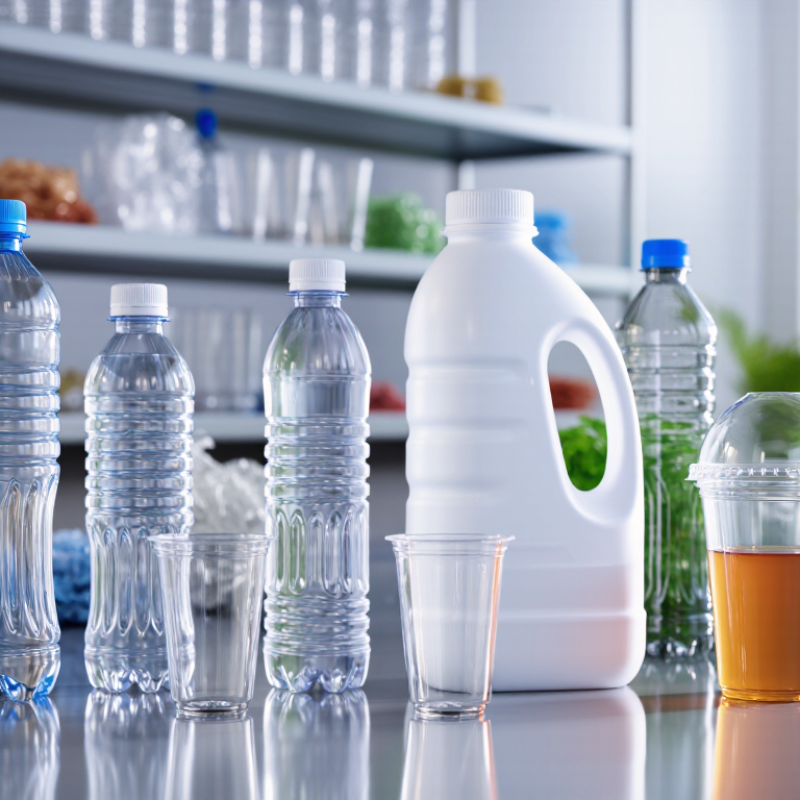
What Type of Plastic Is Best for Plastic Cups and Bottles?

Define Use Requirements: Volume, Temperature, Carbonation, and Reuse Cycles

Choosing plastic for cups and bottles starts with use requirements, not appearance. Volume affects wall thickness, grip, and transport weight. A 250-millilitre cup may need less structural strength than a two-litre bottle. For carbonated drinks, PET is often preferred because its barrier performance helps retain dissolved carbon dioxide. HDPE suits opaque, impact-resistant containers, but it is generally less suitable for carbonation. Polypropylene can handle warmer liquids, although its clarity and gas-barrier performance may be weaker.

Temperature limits need careful testing. Standard PET is commonly used for chilled beverages, while hot-fill applications may require heat-set PET or polypropylene. Do not assume “food grade” means suitable for every temperature. Washing chemicals, filling pressure, and sudden temperature changes can cause warping or stress cracks. A 2024 PlasticsEurope industry report recorded 400.3 million tonnes of global plastics production in 2022, with packaging representing about 39% of demand. That scale makes material efficiency important, but lightweighting cannot replace safety testing.

Reuse cycles change the decision again. Reusable cups should resist repeated washing, impact, and surface abrasion. Polypropylene and certain durable copolyesters can work well for this purpose, but the exact result depends on wall design and cleaning conditions. The Ellen MacArthur Foundation’s 2023 Global Commitment report showed that progress on reducing virgin plastic use remained limited, reminding designers that reuse claims need evidence. Define the cycle count honestly. Ten washes is not the same as one hundred. Test real use conditions, then revise the specification when failures appear.

What Type of Plastic Is Best for Plastic Cups and Bottles?

Define use requirements: volume, temperature, carbonation, and reuse cycles.

Indicative upper-use temperatures for common plastic types. Actual limits depend on wall thickness, additives, filling method, pressure, and product design.

Volume

Choose a lightweight material for small single-use containers and a thicker, more rigid design for larger reusable bottles.

Temperature

PET and HDPE are commonly used for cold or room-temperature drinks. PP generally provides better heat resistance.

Carbonation

PET is widely used for carbonated beverages because it combines low weight with good gas-barrier performance. Container geometry and closure design also matter.

Reuse cycles

There is no universal cycle count. Reusable containers should be replaced when they become scratched, cloudy, cracked, deformed, or difficult to clean.

Choose PET for Clear Bottles: NAPCOR Reports a 24.9% U.S. Recycling Rate

For clear plastic cups and bottles, PET, or polyethylene terephthalate, remains a strong practical choice. It is lightweight, transparent, and resistant to impact during transport. Consumers can also identify it easily through the resin code 1. That visibility matters when sorting household packaging.

NAPCOR reported a 24.9% U.S. recycling rate for PET bottles in 2022. The figure shows meaningful recovery, but it also exposes a gap. Most discarded bottles still do not return to manufacturing. The U.S. Environmental Protection Agency’s Sustainable Materials Management reports similarly emphasize collection, sorting, and end-market access as critical recycling factors. PET works best when bottles are empty, lightly rinsed, and placed in the correct recycling stream. Small actions matter.

Clear PET has another useful advantage. Recyclers can separate it from darker or mixed plastics more efficiently, supporting higher-value applications. Yet “recyclable” does not mean “recycled.” Local equipment, contamination, and collection rules change the outcome. A cap left attached may be accepted in one area and rejected in another. That inconsistency deserves more attention.

From practical packaging evaluations, PET also offers a good balance between clarity and weight. However, it is not automatically the best material for every cup. Hot liquids, repeated use, and long shelf storage may require different specifications. Choosing PET for clear, recyclable bottle formats is sensible, but design must follow local recovery conditions and verified data.

Choose HDPE for Opaque Bottles: Compare Durability, Milk Use, and Recycling Data

For opaque plastic bottles, high-density polyethylene (HDPE) is often the most practical choice.

Its dense structure resists dents, cracks, and repeated handling during transport. That matters when bottles sit in refrigerated cases or move through busy kitchens. HDPE also tolerates cold temperatures well. It is lightweight, yet it feels firm in the hand. Not perfect.

Opaque HDPE is widely used for milk because it blocks much of the light that can affect flavor and nutrient quality. The material is also suitable for leak-resistant closures and easy-to-carry shapes.

By comparison, PET offers excellent clarity but provides less light protection without added design features. Polypropylene can handle some heat better, but it is not always the first choice for large, opaque liquid bottles.

The best option still depends on filling temperature, shelf life, and expected handling.

Tips:

Check the resin code before purchasing. HDPE is usually marked with recycling code 2, but local acceptance varies. Recycling data should be read carefully because collection rates, sorting systems, and end markets differ by region. Clean, empty bottles are more likely to move through the system successfully. Avoid assuming every recycling symbol guarantees recovery. A bottle can be technically recyclable and still face limited local processing. For milk packaging, test opacity, seal strength, and odor retention under real refrigerated conditions. Small trials reveal problems that specifications can miss.

Choose PP for Cups: Assess Heat Performance Against PET Using ASTM Test Data

What Type of Plastic Is Best for Plastic Cups and Bottles?

For cups, polypropylene (PP) is often the stronger choice when heat resistance matters. Its structure usually tolerates warm liquids better than polyethylene terephthalate (PET). However, performance depends on the resin grade, wall thickness, additives, and forming process. A thin PP cup may deform sooner than a thick PET cup.

ASTM test data can make this comparison more reliable. ASTM D648 measures heat deflection under a specified load, while ASTM D1525 measures Vicat softening temperature. These tests show how materials respond to heat and pressure. They do not perfectly predict every serving condition. A laboratory result may look strong, yet a flexible rim can still feel uncomfortable in use. That gap deserves attention. PET often offers higher stiffness, clarity, and useful barrier performance, especially in bottles. PP generally suits hot-fill cups more naturally, but it may appear less transparent.

Tips: Compare PP and PET reports using the same thickness, load, heating rate, and conditioning method. Check impact strength too. Inspect filled samples after heating, stacking, and cooling. Do not rely on one temperature number. Actual use can expose weaknesses that a neat laboratory chart misses. For repeated production, record deformation, leakage, odor, and lid fit during practical trials. A technically acceptable result may still disappoint users.

Verify Compliance: FDA 21 CFR, EU 10/2011, and ASTM D7611 Resin Codes

What Type of Plastic Is Best for Plastic Cups and Bottles?

The best plastic depends on the drink, temperature, reuse pattern, and required durability. Common resin codes include PET, HDPE, and PP. ASTM D7611 identifies these materials through numbered symbols, but the code does not prove food-contact safety. A number is only a starting point.

FDA 21 CFR requirements and EU 10/2011 rules address materials intended to contact food. They may require specific composition controls, migration limits, and supporting documentation. A compliant bottle should match its actual use, including beverage acidity, filling temperature, storage time, and cleaning conditions. I once treated a resin code as a safety certificate. That assumption was wrong.

Tips: Ask for a Declaration of Compliance and migration-test records. Check whether they cover the exact plastic, additives, colorants, and intended conditions. Confirm the ASTM D7611 code matches the supplied material. Do not rely on a recycling symbol alone. Repeated washing can also change performance, especially with thin cups. When evidence is incomplete, pause the purchase and request clarification from the manufacturer or an independent laboratory. That extra step may feel excessive, but it protects both product quality and consumer trust.

What Type of Plastic Is Best for Plastic Cups and Bottles? — FDA 21 CFR, EU 10/2011, and ASTM D7611 Resin-Code Reference
Plastic Type ASTM D7611 Resin Code Key Material Characteristics Typical Cup and Bottle Applications Food-Contact Compliance Checkpoint Advantages Important Limitations Overall Fit
Polyethylene Terephthalate (PET) 1 Clear, lightweight, strong, and commonly used for single-use beverage packaging. Still and carbonated beverage bottles, juice bottles, clear cold-drink cups, and food containers. Check the specific PET formulation and intended use against applicable FDA 21 CFR provisions, commonly including 21 CFR §177.1630. For the EU, confirm that all substances are permitted under Regulation (EU) No 10/2011 and that the finished article has a valid Declaration of Compliance. Excellent clarity, good barrier performance for many beverages, low weight, and widely established recycling stream. Not generally selected for hot-fill or high-temperature use unless the specific grade and design are qualified. Reuse suitability depends on the product design and testing. Best for clear, lightweight, cold beverage bottles and cups.
High-Density Polyethylene (HDPE) 2 Opaque or translucent, tough, chemically resistant, and impact resistant. Milk and water bottles, opaque beverage containers, larger liquid bottles, and durable food containers. Verify the exact polyethylene formulation under applicable FDA 21 CFR requirements, commonly including 21 CFR §177.1520 for olefin polymers. For the EU, verify permitted substances, migration limits, and the intended food-contact conditions under Regulation (EU) No 10/2011. Strong impact resistance, good moisture resistance, and good resistance to many household chemicals. Usually less transparent than PET. Oxygen and flavor barrier performance may be insufficient for some sensitive products without a suitable design or barrier layer. Best for tough, opaque bottles and containers requiring impact resistance.
Polypropylene (PP) 5 Lightweight, fatigue resistant, and generally more heat resistant than PET or HDPE, although performance is grade and design dependent. Reusable cups, hot and cold beverage containers, lids, straws, food tubs, and microwave-compatible articles when specifically designed and tested for that use. Check the specific PP formulation against applicable FDA 21 CFR provisions, commonly including 21 CFR §177.1520. For EU use, confirm compliance with Regulation (EU) No 10/2011, including overall and specific migration limits at the intended temperature and contact time. Good balance of toughness, low density, chemical resistance, and potential suitability for warm or hot applications. Often less clear than PET. A resin code alone does not prove microwave, dishwasher, hot-fill, or repeated-use suitability. Best general choice for many reusable cups and selected hot-fill applications.
Low-Density Polyethylene (LDPE) 4 Flexible, soft, lightweight, and resistant to moisture. Squeezable bottles, flexible caps, liners, dispensing closures, and flexible food-contact components. Verify the formulation and intended use under applicable FDA 21 CFR requirements for polyethylene and under the positive-list, migration, and declaration requirements of Regulation (EU) No 10/2011. Excellent flexibility, sealability, and moisture resistance. Lower stiffness and lower impact strength than HDPE. Generally unsuitable where a rigid, premium-clear bottle or cup is required. Suitable for flexible bottles and closures rather than rigid drinkware.
Polyvinyl Chloride (PVC) 3 Can be rigid or flexible depending on formulation; additives strongly affect performance and compliance. Specialized packaging and selected rigid or flexible food-contact articles when the exact formulation is approved for the intended use. Do not rely on the resin code alone. Verify the exact polymer, plasticizers, stabilizers, residual monomer controls, and intended conditions against applicable FDA 21 CFR requirements, such as relevant vinyl chloride polymer provisions, and against Regulation (EU) No 10/2011. Good versatility, durability, and processability in applications where the formulation is carefully controlled. Formulation-dependent compliance and additive migration concerns can make product qualification more complex. Not usually the first choice for ordinary beverage cups and bottles. Use only when the specific formulation and application have been fully qualified.
Polystyrene (PS) 6 Rigid, lightweight, and easy to process; expanded PS is foamed and insulating. Cold-drink cups, disposable food-service articles, and selected packaging applications. Verify the exact PS grade and additives against applicable FDA 21 CFR provisions, which may include 21 CFR §177.1640, and confirm EU 10/2011 substance authorization and migration compliance. Low cost, good rigidity, and easy forming. Limited heat resistance, relatively brittle behavior, and weaker suitability for durable reusable drinkware. Expanded forms require separate performance and end-of-life considerations. Suitable mainly for selected single-use cold applications.
Other Plastics, Including Multilayer or Specialty Resins 7 Represents plastics not classified by codes 1–6, including some engineering, copolymer, biodegradable, and multilayer materials. Specialized bottles, reusable cups, barrier packaging, and custom applications requiring properties not provided by common commodity plastics. Code 7 has no single compliance meaning. Identify the exact resin and additives, then verify the formulation against applicable FDA 21 CFR requirements and the EU 10/2011 Union List, migration limits, and Declaration of Compliance requirements. Can provide tailored clarity, toughness, heat resistance, or barrier performance. Compliance, recycling, and end-of-life handling vary substantially. The number 7 alone cannot demonstrate food-contact safety or recyclability. Appropriate only when the exact material and compliance documentation are clearly identified.

Regulatory note: ASTM D7611 resin codes identify the predominant resin type for sorting and labeling; they do not certify food-contact safety. FDA 21 CFR compliance and EU Regulation (EU) No 10/2011 compliance depend on the exact formulation, additives, manufacturing process, finished article, food type, temperature, contact time, and intended single-use or repeated-use application.